
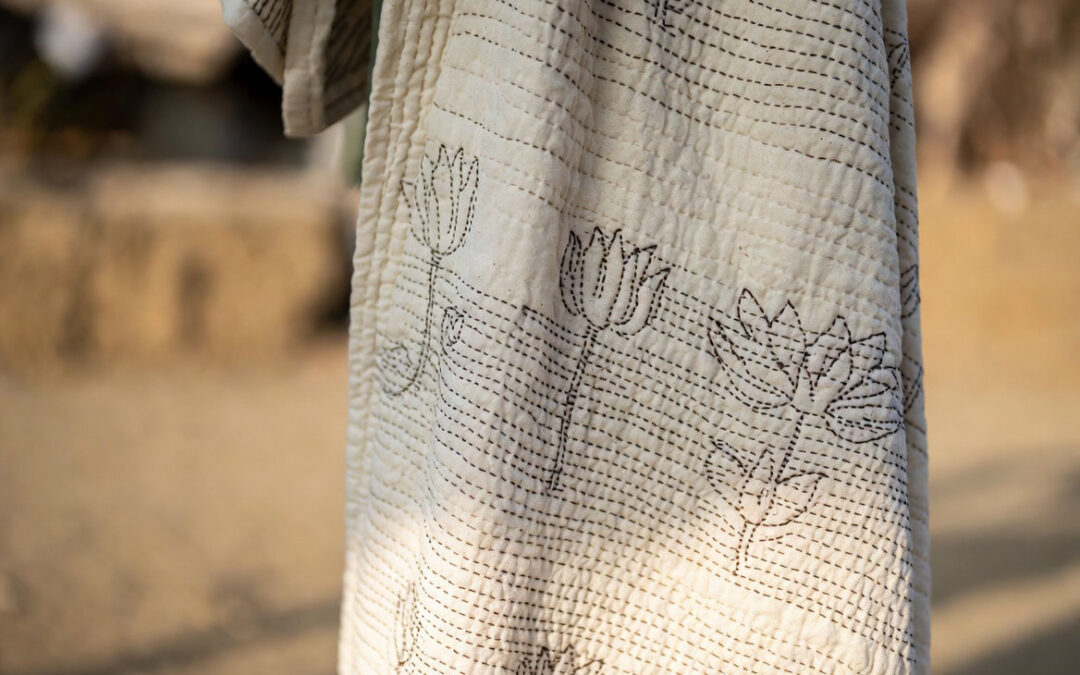
A blanket that tells stories without words.
That is Nakshi Kantha — one of Bengal’s most treasured textile traditions and the heart of every Taati Studio quilt.
For over 400 years, women in rural Bangladesh have taken old sarees, layered them, and stitched them together with nothing but needle and thread. The result is not just a quilt — it is a living piece of cultural memory, sustainability, and love.
The 400-Year-Old Origin Nakshi Kantha was born in the villages of Bengal during the 16th–17th century. The word “Nakshi” comes from the Bengali “naksha,” meaning artistic design or pattern. “Kantha” simply means quilt.
In those days, nothing was wasted. Women saved every worn-out saree, washed and layered three to five pieces together, then stitched them using the simple running stitch. What started as a practical way to keep warm became an art form where every stitch carried meaning — stories of weddings, births, festivals, and daily village life.
The motifs were never random. A lotus flower symbolized purity. A peacock represented beauty and protection. The Tree of Life stood for strength and growth. These designs were passed down from grandmother to mother to daughter, each generation adding their own quiet signature.
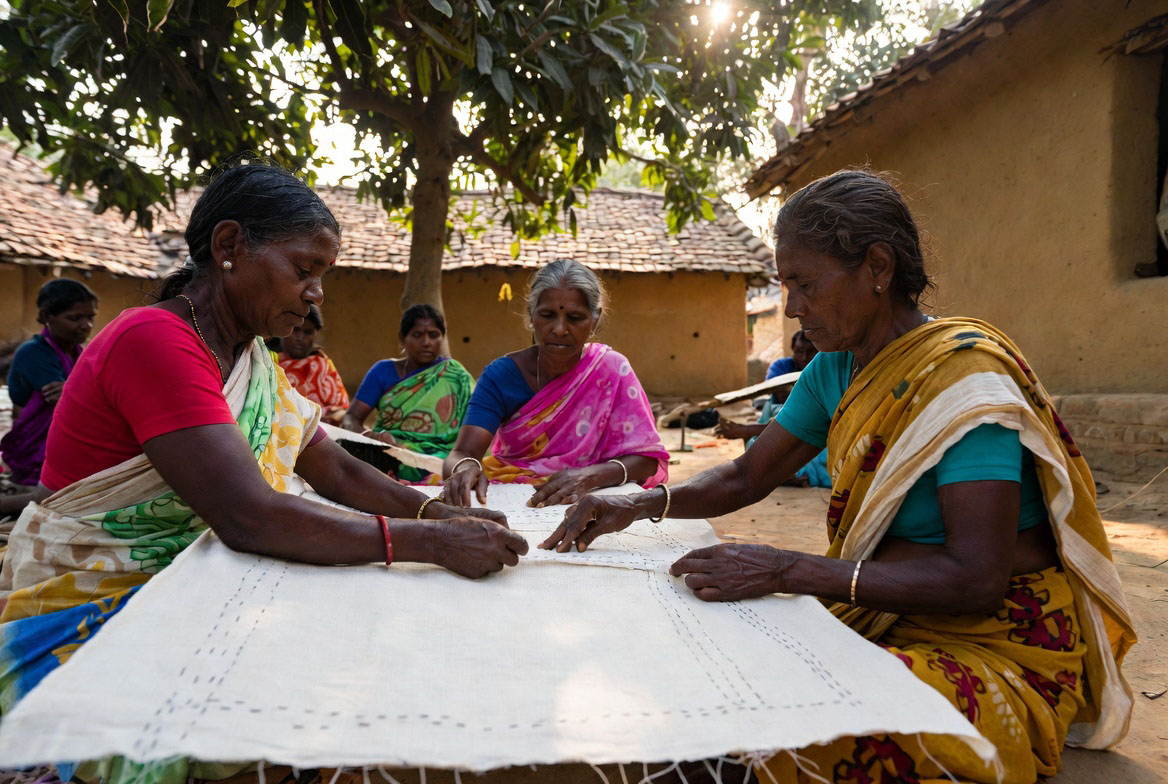
Historical-style image of traditional layered sarees being stitched
How Nakshi Kantha Is Made Today
At Taati Studio, we still follow the exact traditional process — only now with fair wages and direct support for the artisans.
Here is how your quilt is born:
⦁ Selecting the fabric — Old sarees are carefully chosen, washed, and sorted.
⦁ Layering — Three to five layers are stacked for warmth and durability.
⦁ Drawing the outline — The design is lightly sketched with charcoal or pencil.
⦁ The running stitch — The most important step. Artisans work from the center outward, creating the intricate patterns you see.
⦁ Finishing — The edges are neatly turned and stitched to last for generations.
Each quilt takes days — sometimes weeks — of patient handwork. No machines. No shortcuts.
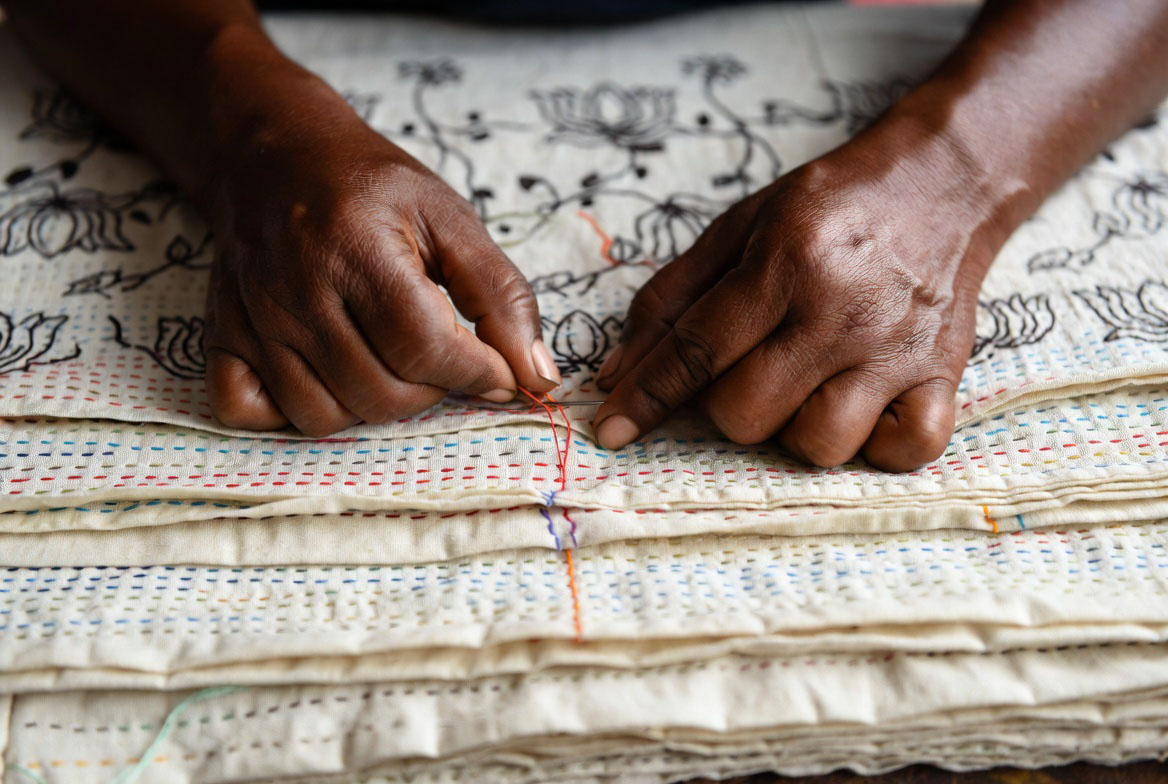
Step-by-step close-up of the running stitch technique
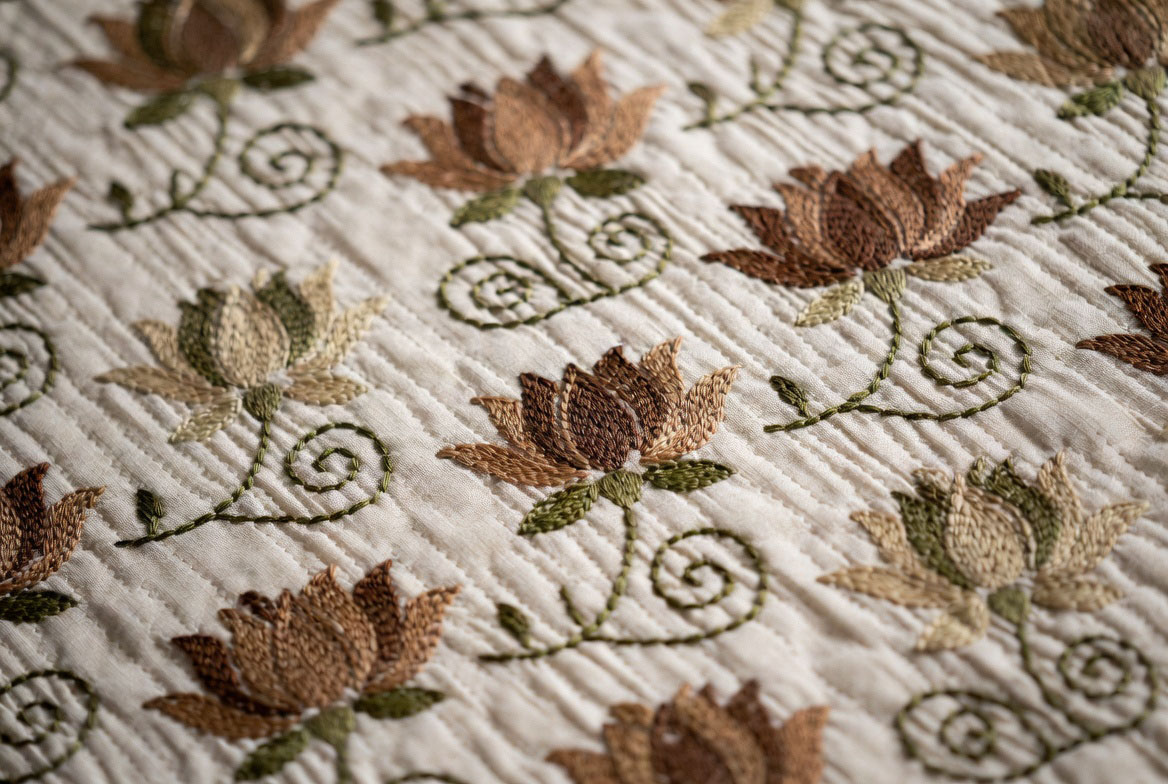
Close-up of finished lotus vine motif on cream quilt
Why Nakshi Kantha Matters in 2026
In an age of fast fashion and machine-made everything, Nakshi Kantha is a quiet rebellion.
⦁ It is zero-waste — made entirely from recycled sarees.
⦁ It is carbon-negative — every stitch is done by hand in village homes.
⦁ It is culturally vital — it keeps a 400-year-old tradition alive for the next generation.
When you bring a Taati Studio Nakshi Kantha quilt into your home, you are not just adding beautiful bedding. You are choosing slow craft over fast fashion, heritage over trends, and real human stories over anonymous products.
The Taati Studio Difference
We do not buy finished quilts from middlemen. We work directly with master artisans like Nurjahan Begum, paying fair wages and placing steady orders so they can plan their lives with dignity.
Every quilt you receive carries the name of the woman who made it — because beauty should have a story, and every story deserves to be told.
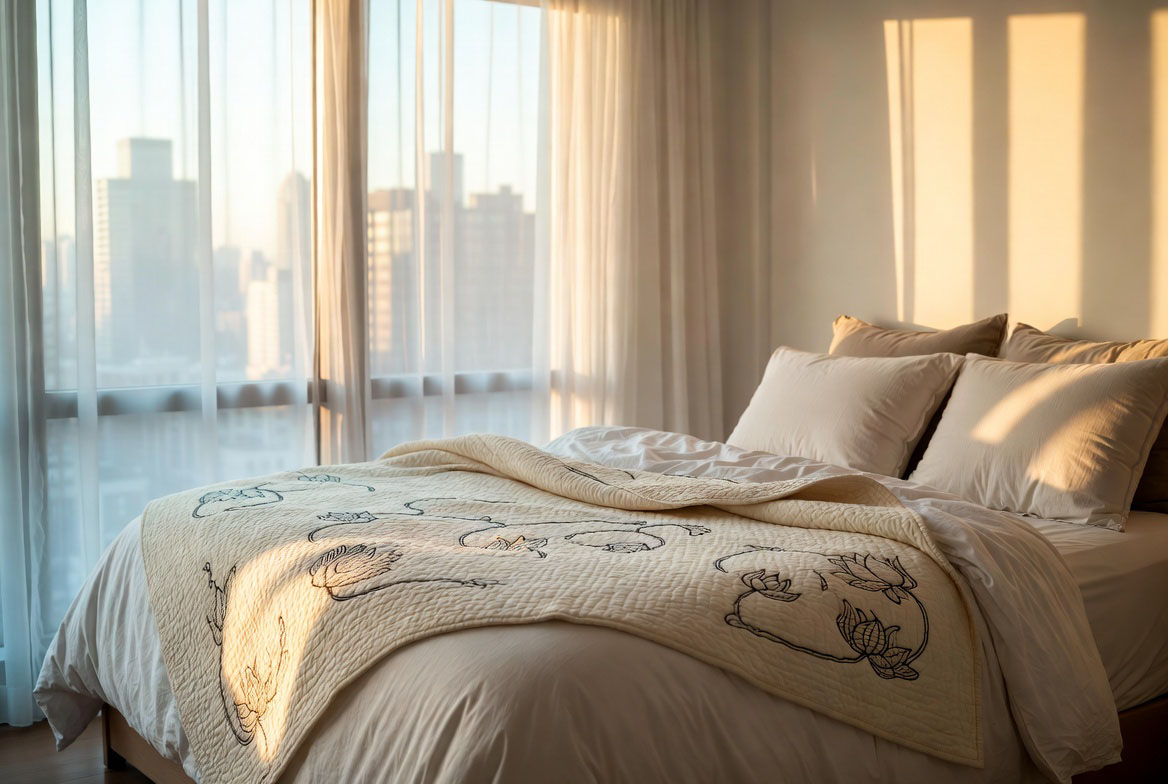
Taati Nakshi Kantha quilt on modern bed
Bring 400 Years of Heritage Into Your Home
Your next quilt is more than bedding. It is a piece of living Bengali history, stitched with care and delivered with purpose
Share Her Story Tag us on Facebook @taatistudio with #TaatiStories so we can celebrate the women behind every stitch.